
Meet Dr. Mohammed Saleem
Dr. Mohammed Saleem is a skilled and compassionate dentist dedicated to providing personalized, patient-focused care. With a strong clinical background and years of experience, he focuses on delivering treatments that are both effective and comfortable.
He believes in clear communication and takes time to help patients understand their treatment options, ensuring a stress-free experience at every visit. Known for his calm and approachable nature, Dr. Saleem is committed to helping every patient achieve a healthy, confident smile.
Introduction
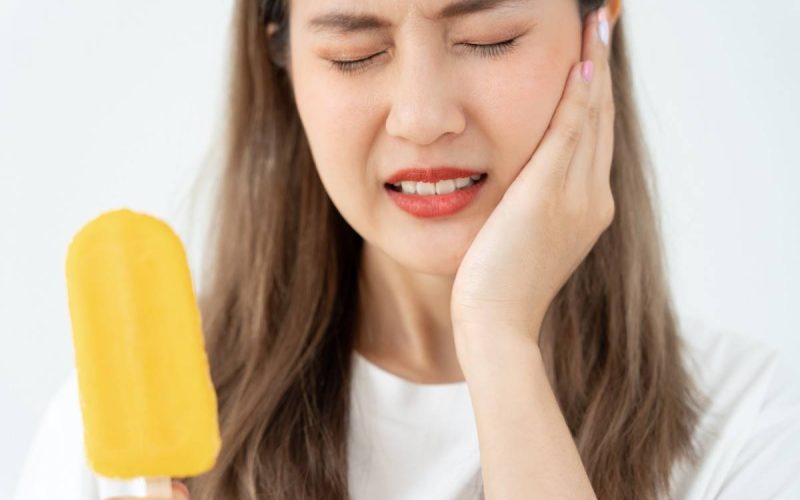
You were trying to enjoy ice cream. That is all. Nobody asked for a sharp, stabbing pain to come along and ruin the moment. Yet here you are, wincing after every cold bite, wondering whether your teeth are falling apart or whether this is just something you have to live with. Here is the truth: you do not have to live with it. Tooth pain triggered by cold foods is a sign, not a sentence. And once you understand what is actually happening inside your teeth, you will know exactly what steps to take to stop it.
The good news? Understanding the root cause of that pain is the very first step toward making it stop. And once you understand what is really going on beneath the surface of your teeth, you will never ignore that warning signal again.
So, what exactly causes that sharp, stabbing pain when you eat something as simple as ice cream? Let us explore the science, the symptoms, and the solutions.
Your Tooth Is Not Solid. And That Changes Everything.
Most people picture a tooth as a hard, sealed, impenetrable chunk. That image is completely wrong, and understanding the real structure of your tooth is the key to understanding why ice cream hurts the way it does.
Every tooth is built in layers. The outermost shell is enamel, the hardest biological material in the human body. Beneath it lies a layer called dentin, which is far softer and riddled with thousands of microscopic tunnels called dentinal tubules. These tiny channels, often discussed during tooth sensitivity treatment with Dr. Mohammed Saleem, run from the surface of the dentin to the innermost core of the tooth, the pulp, where the blood vessels and nerve endings reside.
When the enamel is intact, those tunnels remain sealed, and the nerve remains undisturbed. But the moment that enamel weakens, erodes, or the gums pull back and expose the root, those corridors open up. Cold temperatures rush in, fluid inside the tubules shifts rapidly, and the nerve registers one thing: sharp, sudden pain. That is why ice cream triggers that specific jolt that seems to come from nowhere. The nerve is not broken. It is simply no longer protected.
The Real Reasons Your Teeth Are Losing That Protection
Ice cream does not cause tooth pain on its own. It simply exposes what has already gone wrong beneath the surface. Here are the actual culprits at work.
- Enamel that has been quietly eroding: Every time you sip a carbonated drink, bite into something acidic, or leave sugar on your teeth, acid chips away at the enamel. This erosion is gradual, painless, and invisible until suddenly it is not. By the time ice cream starts hurting, the enamel has already lost a significant portion of its protective thickness.
- Gums that have been quietly retreating: Unlike the crown of the tooth, the root has no enamel protecting it. It is covered only by a thin layer called cementum, which offers very little defense against cold temperatures. When gum tissue recedes due to gum disease or rough brushing, those unprotected roots, often requiring cold sensitivity treatment, are exposed to whatever you put in your mouth, including ice cream.
- A crack you cannot see, but your nerve absolutely can: Teeth can develop hairline fractures from grinding, biting something hard, or years of temperature-related stress. These micro-cracks are often invisible on X-rays. But when cold temperatures reach the tooth, the crack flexes slightly, and the nerve fires with an intense, sharp response. This is called cracked tooth syndrome, and it is far more common than most people realize.
- A cavity that has been growing in silence: Tooth decay does not announce itself until it is deep enough to cause real trouble. By the time ice cream triggers pain, the decay is already sitting dangerously close to the nerve. The sugar feeds the bacteria, driving decay, while the cold temperature simultaneously fires the nerve. It is a painful double hit.
- Nighttime grinding, you do not even know about: Bruxism slowly but relentlessly strips enamel from the biting surfaces of teeth. Many people discover they grind only after a dentist points out the wear patterns. By that stage, the enamel is already thinned, and the teeth are measurably more sensitive to temperature changes.
The Pain That Should Never Be Ignored
There is a spectrum of cold sensitivity, and knowing where your pain falls on it matters enormously.
A brief twinge that disappears within seconds can sometimes be managed with desensitizing toothpaste and improved oral hygiene. But if the pain lingers for more than 30 seconds after the cold stimulus is removed, if it throbs, spreads to the jaw, wakes you at night, or comes with visible swelling or a bad taste in the mouth, you are dealing with something far beyond surface sensitivity. That level of pain, which may require an evaluation to diagnose sensitive teeth with Dr. Mohammed Saleem, typically signals deep decay, nerve involvement, or a dental abscess, all of which need prompt professional treatment, not home remedies. Pain that intensifies rather than fades is your body escalating the signal. Do not ignore it.
What Happens When You Actually Do Something About It
Walking into a dental clinic with a sensitivity complaint is one of the most productive things you can do for your long-term oral health. Most causes of cold sensitivity are entirely treatable when caught early.
Depending on the cause, Dr. Muhammed Saleem may recommend a professional fluoride treatment to remineralize the enamel, dental bonding to protect an exposed root surface, a new filling to close off a compromised restoration, a crown to stabilize a cracked tooth, or a custom night guard to eliminate grinding-related wear. The approach is always tailored to the root cause, because treating sensitivity without identifying its origin is like turning off a smoke alarm without checking for the fire.
FAQ’s
Q1. Why does ice cream pain feel so sharp and sudden compared to other toothaches? Cold sensitivity travels through the dentinal tubules almost instantaneously, firing the nerve with very little warning. Unlike a dull, throbbing ache from infection, cold-triggered pain hits the nerve sharply and directly, which is why it feels more like an electric shock than a gradual ache.
Q2. The pain goes away in seconds. Does that mean it is not serious?
Short-lived sensitivity often indicates early-stage enamel erosion or mild dentin exposure, both of which are worth addressing before they progress. That window of “not yet serious” is the best time to intervene. Early treatment is always simpler, cheaper, and far less invasive than waiting.
Q3. Can children get this type of tooth pain from ice cream?
Yes, and more easily than adults might expect. Children’s enamel is thinner and less mineralized than mature adult enamel. Combined with diets high in sugar and acid, young teeth can become sensitive relatively quickly. If a child flinches every time they eat something cold, a dental visit is the right next step.
Q4. I have used sensitive toothpaste for months with no relief. Why?
Desensitizing toothpaste works only for mild, surface-level sensitivity by gradually blocking the dentinal tubules. If the underlying cause is a cavity, a crack, receding gums, or a failing restoration, no toothpaste will address the actual problem. Persistent sensitivity that does not respond to desensitizing products is a clear sign that a professional diagnosis is overdue.
Q5. Can I prevent this kind of pain in the future?
Absolutely. Brushing twice daily with fluoride toothpaste, flossing regularly, reducing acidic and sugary foods, and attending routine dental checkups are the most effective long-term defenses.
Conclusion
Ice cream should be a pleasure, not a test of endurance. That sharp pain is not something to normalize or quietly accept. It is your tooth sending you specific, actionable information pointing directly to a problem that needs solving.
As Dr. Muhammed Saleem always reminds his patients, the mouth does not remain silent forever. A sensitivity that could be treated with a simple fluoride application today may require a root canal or crown tomorrow if left unaddressed. Understanding the importance of timely tooth sensitivity treatment with Dr. Mohammed Saleem can help prevent minor discomfort from developing into a more serious dental problem. Your teeth work hard for you every single day. The least they deserve is one appointment when they tell you something is wrong.
Remember: That sharp jolt from ice cream is not normal wear and tear. It is your tooth’s nerve sending a direct message that its protection has been compromised. Listen to it early.
Disclaimer: The information in this blog is intended for general awareness purposes only and does not substitute professional dental advice, diagnosis, or treatment. Please consult Dr. Muhammed Saleem or a qualified dental professional for a thorough evaluation of your symptoms.